



October 20, 2026
Calculating the true financial outlay of running an industrial mixing facility requires analyzing dynamic daily expenditures rather than looking solely at machinery quotes. While capital allocation plays a key role during initial site planning, ongoing operational expenses determine long-term project profitability. Energy consumption, specialized workforce labor, and preventive maintenance routines form the primary triad of continuous expenses on active job sites. Managing these operational variables effectively ensures consistent concrete quality while protecting operating margins. Construction businesses evaluating a concrete plant for sale(venta de planta de concreto) must look beyond base acquisition rates to analyze how fuel logistics, component wear patterns, and automated workforce controls influence operating metrics across long project cycles.
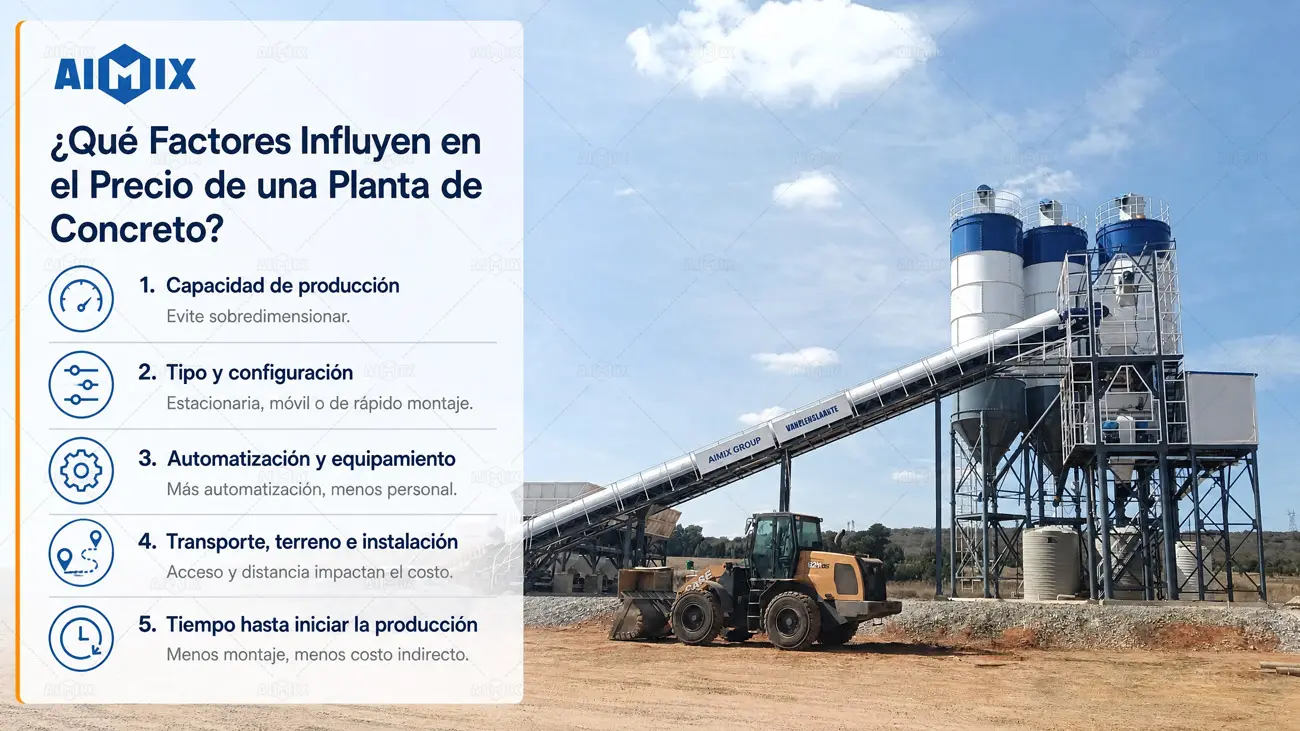
Deconstructing Energy Consumption Across Batching Workflows
Power utilization represents a major recurring expenditure in modern concrete manufacturing. Energy expenses vary based on mixer motor horsepower, material handling methods, and local grid tariffs or fuel logistics.
Electricity and Diesel Power Demands
Mixing machinery relies heavily on consistent electrical supply or industrial generators to process dense aggregates and viscous cement binders:
-
Pumping and Pneumatic Conveying: Transferring cementitious powders into silocore systems consumes substantial electrical current, requiring balanced power loading during peak batch cycles.
-
Mixer Drive Systems: Twin-shaft and planetary mixers require sustained power inputs during high-shear blending phases to achieve structural homogeneity.
-
Aggregate Belt Feeders: Continuous incline conveyors draw steady power when moving heavy stone and sand loads to the weigh hoppers.
Deploying an energy-efficient mobile concrete plant(planta de hormigón móvil) helps sites operating in off-grid environments minimize diesel fuel consumption per batching cycle, significantly lowering site overheads.
Regional Infrastructure Factors Influencing Energy Costs
Energy tariffs fluctuate significantly across geographic locations. Projects operating remote resource sites, such as industrial concrete plants in Chile, often rely on temporary high-capacity generators. Local fuel logistics, altitude adjustments, and ambient temperature demands for aggregate heating or water chilling directly impact kilowatts consumed per cubic meter produced.
Labor Efficiency and Workforce Optimization Frameworks
Direct labor expenses extend beyond baseline hourly wages. Modern plant operations rely on lean, tech-enabled crews to manage production schedules while maintaining strict quality parameters.
Modern Automation and Crew Allocation
Automation software has transformed workforce demands across modern production plants. Manual operations require distinct crews for batch weighing, moisture sampling, and gate discharge:
-
System Operators: Oversee digital batching consoles, verifying mix proportions and real-time moisture compensation settings.
-
Quality Control Technicians: Conduct slump testing and sample collection to verify compressive strength parameters.
-
Ground Maintenance Crews: Perform continuous daily washdowns and material clearance around hopper bins and discharge chutes.
Investing in an automated concrete plant for sale allows companies to run operations with fewer manual workers, reducing direct labor overhead while improving batch accuracy.
Flexible Site Deployment and Labor Mobility
Project scale and location influence crew structures. For contractors managing infrastructure projects spanning multiple geographic points, deploying a versatile mobile concrete plant allows core operating crews to move alongside production assets, eliminating the need to recruit and train local operators for every new site phase.
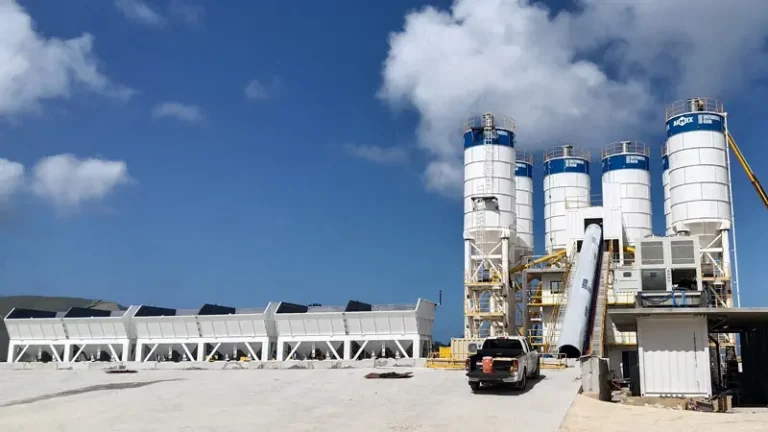
Preventive Maintenance Protocols and Component Wear Analysis
Wear and tear is an inevitable aspect of processing abrasive raw materials. Establishing structured preventive maintenance routines prevents costly unscheduled downtime and extends machinery service life.
High-Wear Components and Replacement Cycles
Abrasive sand and coarse aggregates cause structural erosion across several critical component zones:
Primary Wear Zones
-
Mixer Liners and Mixing Blades: Require frequent inspection and periodic replacement to maintain proper clearance and mixing action.
-
Discharge Gates and Seals: Suffer constant abrasive friction, requiring regular lubrication and seal replacements to prevent material leakage.
-
Conveyor Belts and Idler Rollers: Subject to tension stress and dust accumulation, requiring continuous alignment checks.
Regional Supply Chains for Replacement Spare Parts
Maintaining operational continuity depends heavily on rapid parts availability. Contracting operations relying on concrete plants in Chile(plantas de hormigón en Chile) must partner with regional equipment suppliers that carry local inventories of wear liners, load cells, and pneumatic valves to avoid lengthy international shipping delays.
Sourcing a robust mobile concrete plant built with standard global components allows site technicians to source replacement fittings locally, ensuring quick field repairs.
When reviewing any commercial concrete plant for sale, estimating total lifecycle maintenance reserves ensures realistic financial projections throughout the equipment's operational lifetime.
Strategic Cost Optimization Guidelines for Site Managers
To lower running expenses without compromising material output quality, project directors should implement targeted operational controls.
-
Optimize Batch Cycles: Synchronize mixing schedules with concrete delivery trucks to eliminate mixer idling time and reduce fuel waste.
-
Calibrate Sensors Frequently: Conduct routine scale and moisture meter calibrations to prevent over-dosing expensive cement powders.
-
Establish Localized Support: Whether running stationary units or deploying concrete plants in Chile, secure service level agreements with regional technicians for emergency repairs.
By continuously auditing energy metrics, optimizing crew efficiency, and enforcing proactive component maintenance, construction companies can drive down production expenses and maximize return on operational investments.
Posted by: aimixmaquina at
02:34 AM
| No Comments
| Add Comment
Post contains 809 words, total size 8 kb.
October 15, 2026
The modern construction landscape is shifting toward rapid deployment, automated calibration, and intelligent pre-assembled machinery. For years, setting up a heavy industrial facility involved weeks of manual alignment, complex electrical wiring, and dedicated engineering teams residing on-site for months. However, the introduction of next-generation equipment like our brand-new AJQ series modular batching plants has transformed this operational paradigm. Contractors evaluating an AJQ70 compact concrete plant(AJQ70 planta compacta de concreto) frequently ask whether traditional on-site engineering presence is still mandatory during the final commissioning phase. While factory pre-calibration and smart automation have drastically reduced installation hours, professional commissioning guidance remains a pivotal investment for ensuring long-term batching precision, regulatory compliance, and operational safety.
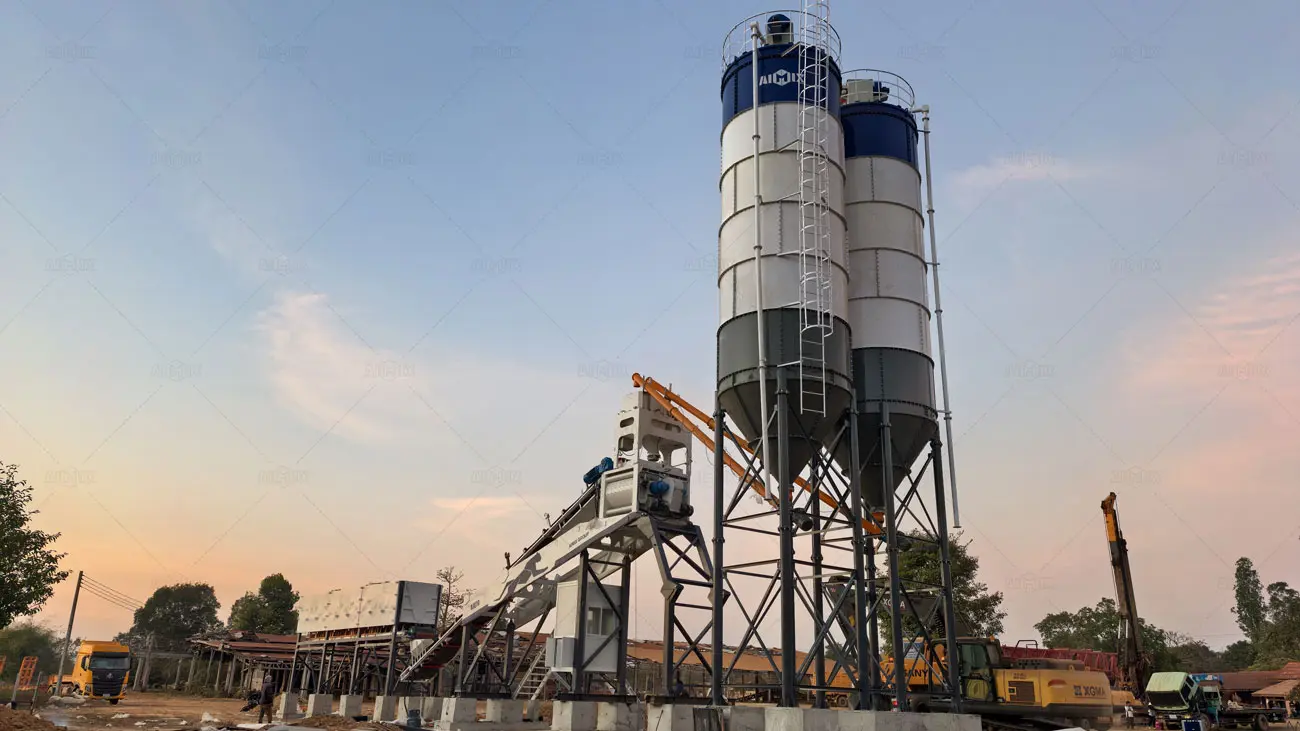
The Evolution of Quick-Install Engineering: Factory-Tested vs. Site-Verified
Traditional setups required engineers to build electrical cabinets, calibrate load cells, and test mechanical drives directly in the field. Modern pre-wired systems have revolutionized this workflow, making equipment deployment far more straightforward.
Factory Pre-Assembly and Smart Diagnostics
Our innovative AJQ series utilizes plug-and-play connections and pre-tested mechanical modules. When setting up an AJQ70 compact concrete plant, every aggregate bin, weighing belt, and mixing module undergoes preliminary electrical and hydraulic verification prior to dispatch.
-
Pre-configured wiring harnesses eliminate complex electrical mapping on-site.
-
Factory-calibrated load cells ensure that basic weighing routines function immediately out of the box.
-
Integrated digital diagnostic software performs self-checks before raw materials enter the mixing drum.
This plug-and-play architecture significantly simplifies mechanical setup for any contemporary ready-mix concrete plant(planta de concreto premezclado), allowing contractors to complete structural assembly faster than ever before.
Why On-Site Calibration Remains Critical
Despite high levels of factory automation, physical site conditions introduce variables that no factory test can fully replicate. Ground stability, localized electrical fluctuations, and local aggregate grading directly impact equipment calibration. Whether an enterprise operates a large facility or is installing a localized concrete plant for sale in Peru, localized calibration ensures the batching software accounts for local moisture content, specific gravity of regional stone, and regional power grid variances.
Operational Pillars of Modern Engineering Commissioning
When skilled technical engineers oversee the post-installation phase of an AJQ70 compact concrete plant, their role extends beyond merely turning on the machine. Their focus pivots toward optimizing system performance, material accuracy, and software integration.
High-Precision Weighing System Calibration
Producing high-performance concrete requires strict adherence to mix designs. Commissioning engineers perform dynamic calibration using certified test weights to fine-tune system responsiveness:
-
Aggregate Scale Tuning: Adjusting gate opening speeds to prevent over-shooting raw material target weights.
-
Liquid Dosing Calibration: Fine-tuning pulse meters and flow sensors for water and chemical additives.
-
Cement Scale Sensitivity: Ensuring micro-vibrations from nearby machinery do not compromise load cell accuracy.
This detailed fine-tuning ensures that every modern ready-mix concrete plant achieves consistent structural strength and minimizes material waste.
Software Customization and Control Interface Setup
Modern mixing facilities rely on advanced central control software. During commissioning, engineers customize the operating system to match specific project workflows. For teams establishing a concrete plant for sale in Peru(venta de planta de concreto en Perú), engineers configure localized user interfaces, set up customized batch reporting protocols, and integrate remote troubleshooting modules so local operators can manage daily tasks seamlessly.
Maximizing Operational ROI with Hybrid Commissioning Models
To give contractors maximum flexibility and speed, our AJQ series supports a hybrid commissioning framework combining remote digital guidance with targeted on-site engineering support.
Interactive Remote Commissioning
For standard sites with experienced mechanical crews, remote augmented-reality commissioning provides real-time guidance:
-
Cloud-Connected Telemetry: Engineers review sensor data, load cell feedback, and motor performance remotely.
-
Live Video Audits: Technical specialists inspect torque settings, mechanical alignments, and safety switches.
-
Parameter Push: Revised firmware and calibration tables are uploaded directly to the machine via cloud interfaces.
This model allows an AJQ70 compact concrete plant to achieve operational readiness in record time while keeping initial deployment costs low.
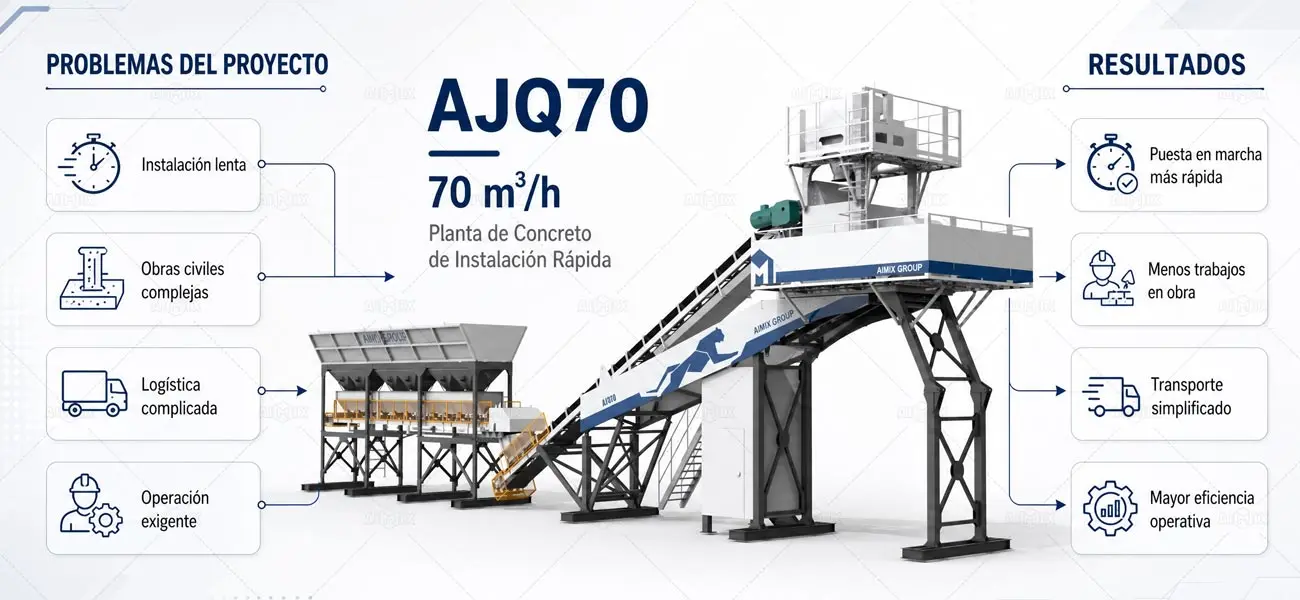
On-Site Engineering Support for Complex Projects
For large-scale civil engineering projects, mega-infrastructure installations, or remote deployments, having an engineer on-site offers unmatched reassurance. In rugged topographies where companies deploy a concrete plant for sale in Peru, on-site specialists handle challenging variables like high-altitude power drops, erratic water pressure, and specialized aggregate blends, transforming a potential bottleneck into a smooth operational launch.
Unlocking Peak Performance for Your Next Concrete Facility
The role of engineers during post-installation commissioning has evolved from manual labor to high-level strategic optimization. Equipment innovations like our AJQ series dramatically shorten setup timelines, but expert technical guidance during commissioning bridges the gap between mechanical installation and peak profitability. Whether you are expanding a commercial ready-mix concrete plant fleet or deploying a versatile AJQ70 compact concrete plant for high-mobility infrastructure, leveraging professional commissioning services guarantees high-precision batching, extended machine longevity, and immediate compliance with strict concrete standards. Investing in proper system tuning today establishes the foundation for reliable, profitable concrete production across all your future construction endeavors.
Posted by: aimixmaquina at
02:46 AM
| No Comments
| Add Comment
Post contains 814 words, total size 8 kb.
October 09, 2026
Selecting equipment for road and bridge construction projects requires looking far beyond a manufacturer’s brochure. When project managers calculate output schedules, they often focus strictly on rated hourly tonnage. However, actual productivity depends on a complex web of environmental, logistical, and mechanical variables that dictate real-world output.
Understanding what truly controls production rates enables site managers to eliminate bottlenecks, minimize downtime, and maintain high-grade pavement quality. Whether operating in dense urban centers or remote mountain passes, evaluating an asphalt mixing plant demands a multi-dimensional approach that spans thermal dynamics, software precision, and site logistics.

Beyond Rated Tonnage: The Dynamic Reality of Plant Output
A standard asphalt mixing plant(planta mezcladora de asfalto) is typically rated by its theoretical peak output, such as 160 or 240 tons per hour. In practice, achieving this peak consistently is rare. True production capacity is limited by the slowest component in the operational chain. If the burner cannot dry damp aggregate fast enough, or if asphalt supply trucks face traffic delays, the nominal capacity becomes irrelevant.
Furthermore, project mobility plays a major role in operational efficiency. In linear road construction or short-duration bridge repair projects, setting up stationary infrastructure can cause significant delay. Utilizing a mobile asphalt plant allows contractors to relocate equipment closer to the paving site, drastically cutting hauling distance and stabilizing hourly production yields.
Geographic conditions also drastically alter equipment performance. For instance, contractors managing asphalt plants in Peru often must account for extreme elevation changes across the Andes. Higher altitudes decrease air density, directly impacting burner combustion efficiency and draft fan performance, which in turn recalculates total output capacity.
Thermal Energy and Aggregate Moisture Control
The primary bottleneck in hot mix production is almost always thermal energy transfer—specifically, removing moisture from aggregate materials.
Aggregate Moisture Content and Dryer Drum Dynamics
Water absorption in virgin aggregate acts as an energy sink. A single percentage point increase in aggregate moisture can reduce plant output by 10% to 15% because the dryer drum must consume significantly more thermal energy to vaporize the extra water before the material reaches mixing temperature.
Burner Efficiency and Exhaust Air Handling
To maintain target production rates when dealing with wet aggregate, the combustion burner and exhaust baghouse must operate in perfect synchronization. If the burner capacity is maximized but the exhaust fan cannot clear the moisture-laden gas stream, the dryer drum will flood, forcing operators to turn down the cold feed system.
Mix Design Complexity and Modern Automation
Modern road specifications demand highly tailored asphalt formulations, including modified binders, recycled asphalt pavement (RAP), and warm-mix additives. Each added variable influences cycle times.
Batching Precision versus Continuous Mixing
In batch-type plants, every aggregate size, mineral filler, and liquid asphalt dose must be individually weighed before dropping into the pugmill. Advanced control software can optimize scale stabilization times, shaving seconds off each batch cycle. Over a ten-hour shift, saving three seconds per batch translates to dozens of additional tons of finished hot mix from your asphalt mixing plant.
High-Percentage RAP Processing
Integrating RAP requires careful thermal management to prevent bitumen aging while ensuring thorough heat transfer. Plants equipped with dedicated RAP dryers or specialized collar feed systems can sustain high production levels even when producing mixes containing 30% or more recycled content.
Micro-Logistics, Elevation, and Site Integration
Even a perfectly calibrated plant cannot produce at full capacity if the site infrastructure fails to support continuous material movement.
High-Altitude Combustion and Atmospheric Drag
As noted with asphalt plants in Peru, mountain terrain introduces unique thermodynamic challenges. Lower atmospheric pressure limits oxygen availability for the burner, requiring custom air-to-fuel ratio tuning or upgraded draft fans. Ignoring elevation impacts can lead to incomplete combustion, wasted fuel, and an unintended 20% drop in overall plant output.
Haul Fleet Synchronization and Surge Storage
Continuous production relies on continuous discharge. Installing high-capacity surge storage silos provides a crucial buffer between the mixing tower and the transport fleet. When hauling distances vary, an agile mobile asphalt plant(planta de asfalto móvil) supported by adequate silo capacity prevents plant shutdowns caused by waiting trucks.
Strategic Considerations for Maximizing Daily Throughput
Optimizing capacity requires analyzing the entire production ecosystem rather than focusing solely on mechanical specifications.
To maintain maximum real-world throughput across diverse project sites:
-
Pre-screen and cover aggregate stockpiles to minimize moisture retention.
-
Calibrate burner airflow to match local elevation characteristics, particularly for high-altitude installations like asphalt plants in Peru(plantas de asfalto Perú).
-
Leverage a mobile asphalt plant for decentralized projects to reduce transit times and maintain mix temperature.
-
Implement real-time digital monitoring on your asphalt mixing plant to identify batch cycle micro-delays before they impact daily targets.
By viewing production capacity as a flexible, system-wide variable rather than a fixed rating, civil engineers and pavement contractors can ensure consistent supply, lower operating costs, and long-term project success.
Posted by: aimixmaquina at
02:45 AM
| No Comments
| Add Comment
Post contains 807 words, total size 7 kb.
32 queries taking 0.017 seconds, 69 records returned.
Powered by Minx 1.1.6c-pink.

